Your AI Agent Can Now Edit Video for You. The Boring Protocol That Made It Possible.
A year ago, getting an AI to touch your video meant copy-pasting between tabs. Now you just ask. The thing that quietly made that possible is called MCP, and it changes what an agent actually is.
Type this into your AI agent today: "Turn this podcast recording into a finished video with B-roll." If your agent is connected to the right tools, it doesn't hand you instructions. It uploads the file, transcribes it, finds the moments worth illustrating, generates the clips, assembles the cut, and hands you back a finished video.
A year ago that sentence was science fiction. Not because the AI got smarter overnight, but because of a piece of plumbing almost nobody talks about. It's called the Model Context Protocol, or MCP. It is genuinely boring. It is also the reason your agent stopped being a chat box and started being something that can actually do things.
The problem MCP quietly solved
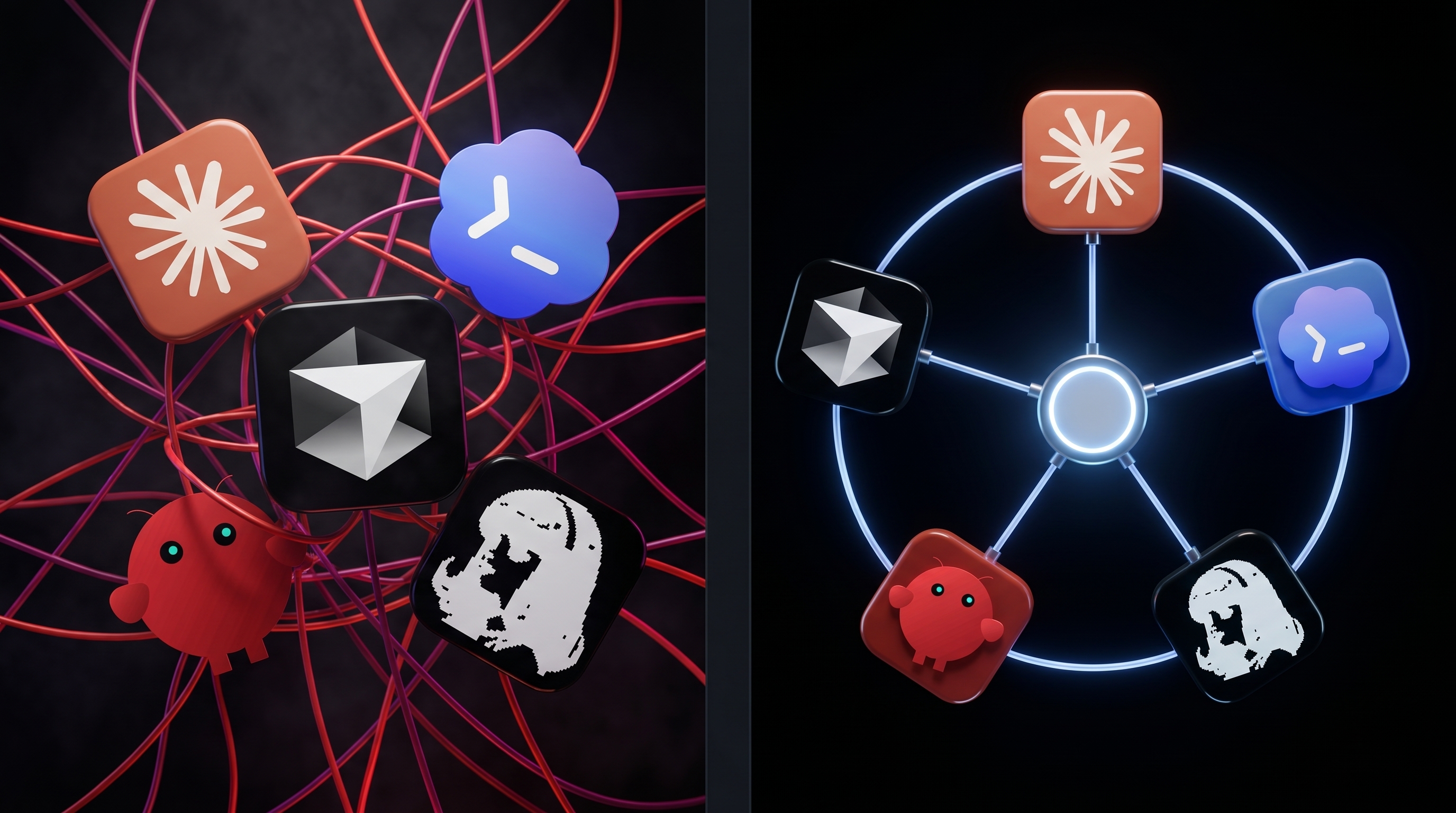
Before MCP, connecting an AI assistant to a real service was a mess. Every tool had to build a custom integration for every assistant. ChatGPT needed one. Claude needed a different one. Cursor needed its own. If you had ten services and five assistants, somebody had to build and maintain fifty separate integrations. Most never got built, so your assistant could talk about your tools but never reach them.
MCP killed that math. It's a single open standard for how an AI agent talks to an outside service. You build one MCP server, and every MCP-capable client can use it: Claude, Codex, Cursor, and a growing list of others. One protocol instead of fifty bespoke bridges.
The protocol showed up at the end of 2024. By 2026 it stopped being a curiosity and became the default way agents reach the outside world. The big shift this year was remote servers with real authentication. Earlier MCP servers mostly ran on your own machine. The 2026 generation lives on the open web, behind OAuth 2.1, the same battle-tested standard that powers "Sign in with Google."
Why the auth part matters more than it sounds
Here's the part that actually changed the experience for normal people.
Old way: paste an API key into a config file. Keys leak. They sit in plain text. They never expire unless you remember to rotate them. And honestly, most people never set them up at all because it felt sketchy.
New way: you add one URL to your agent. A browser window opens. You sign in the way you already sign into everything, click "approve," and you're done. No key to copy, nothing to paste, nothing sitting in a file waiting to leak. Behind the scenes the agent gets a short-lived token scoped to exactly one service, so a token meant for your video tool can't be replayed anywhere else.
That is the difference between a feature engineers tolerate and a feature anyone will actually use.
It also happens to be where the whole conversation moved in 2026. Now that agents can reach real systems, the loud question stopped being "what can MCP do" and became "is this safe," to the point that the NSA put out guidance on MCP security this year. The answer the standard landed on is exactly the flow above: no long-lived keys floating in config files, a browser sign-in you control, and tokens bound to one service so they cannot be reused somewhere else. Connecting an agent to your video pipeline should feel less risky than the API key you would have pasted a year ago, not more.
What this looks like for video
This is the part we care about, because it's what we built.
Compledio turns a video or audio file into a finished cut with AI-generated B-roll, and it also does standalone image and video generation in a Studio. All of that now lives behind a single MCP server. You connect your agent to one address:
https://mcp.compledio.com/api/mcp
A browser opens, you sign in, you click approve. From that moment your agent can drive the whole pipeline as you, billed to your existing credits. No new account, no API key, no separate dashboard.
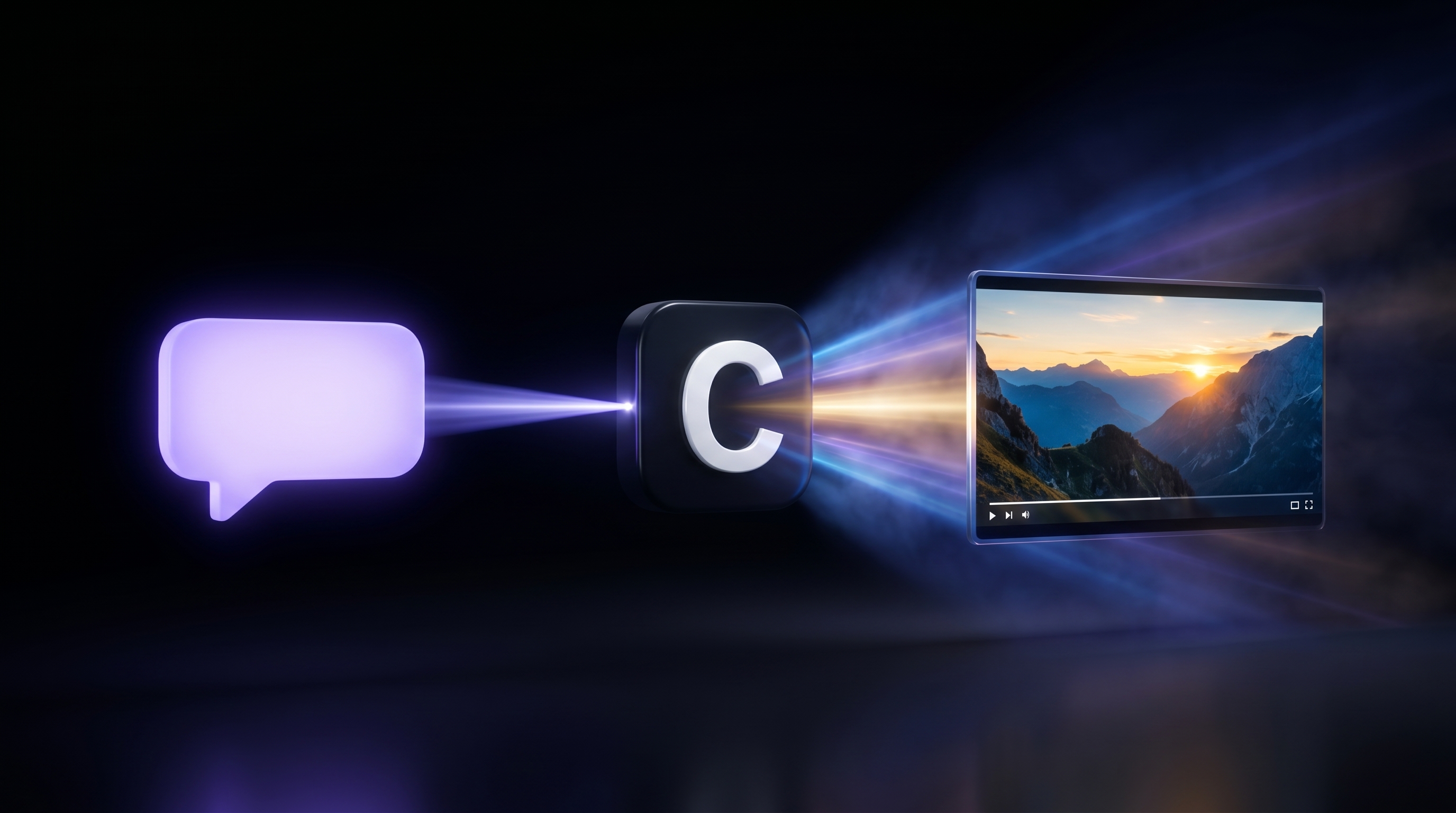
A real exchange looks like this:
You: I just recorded a 20-minute episode. Make it a video with B-roll.
Agent: Uploading the file... transcribing... I found 14 moments worth illustrating. Generating B-roll for each and assembling. This will take a few minutes.
(a few minutes later)
Agent: Done. Here's your finished video.
The agent isn't faking it. Under the hood it's calling real tools: create the project, start the pipeline, poll until it's done, fetch the result. You can also ask it to generate a single image or a short clip on the spot, supply a reference image, or list everything you've made. Same tools the website and our Premiere Pro plugin use, just driven by your agent instead of your mouse.
The shift underneath all of this
It's easy to read "AI can now edit video" as just another feature. It's bigger than that.
For two years, AI assistants were eloquent and stranded. They could describe exactly how to do a thing, then leave you to go do it by hand across six tabs. MCP is what connects the talking to the doing. The agent stops being a smart search box and becomes an operator that reaches into real services and gets work done.
Video is a good early proof because it's so obviously tedious. Transcribing, finding the right cutaway, sourcing footage, syncing it to the timeline: that's hours of unglamorous work that nobody actually enjoys. Handing it to an agent that can run the whole chain end to end is exactly the kind of thing this protocol was built for.
How to connect, in about a minute
If you want to try it, the setup is genuinely short:
- Add
https://mcp.compledio.com/api/mcpto your agent as a remote MCP server. - When the browser opens, sign in and approve.
- Ask it to make you a video.
The exact one-liner depends on your client. We wrote a short guide for each of the ones we support:
MCP is boring on purpose. It's plumbing. But good plumbing is exactly what turns a clever demo into something you use every day without thinking about it. The next time your agent quietly does ten minutes of real work from one sentence, that's the boring protocol earning its keep.